

Everything you need to know about choosing the right cleaning brush for your bottles, straws, and cup lids. Simple tips, honest advice, and the one tool that does it all.
You rinse your water bottle every day. You run it through the dishwasher. You think it is clean. But inside the narrow neck, under the lid groove, and deep inside the straw, bacteria and mold can grow without you even knowing. The fix is simple. The right cleaning brush reaches every spot a sponge and dishwasher cannot. This guide helps you find the best one.
01
Why a Dedicated Cleaning Brush Matters
Most people wash their bottles and cups the same way they wash a plate. A quick rinse or a run through the dishwasher. It feels clean. But reusable bottles and straws have narrow shapes that water alone cannot fully reach.

Studies on reusable water bottles show that bacteria can build up on the inner walls within 24 to 48 hours if the bottle is not properly scrubbed. The lid grooves and straw channels are the worst spots. They hold moisture. They trap food particles. And they rarely get cleaned well with a standard sponge.
A dedicated cleaning brush solves this directly. It reaches every narrow spot and scrubs the surfaces that need it most.
The Problems That Build Up Without a Brush
- Mold grows inside bottle necks and lid seams, often invisible to the eye
- Bacteria from drinks like coffee and juice build up on the inner walls
- Straws develop a slippery biofilm that plain water rinsing does not remove
- Bottles start to smell stale even after washing
- Tumblers and thermos lids collect dark residue in crevices
02
Types of Bottle and Straw Cleaning Brushes
Cleaning brushes come in different shapes for different jobs. Knowing which type does what helps you choose the right tool and use it correctly.
The Spiral Bottle Brush
- Has bristles wound in a tight spiral along a long flexible handle
- Designed to reach all the way to the bottom of narrow bottles and thermos flasks
- The spiral shape scrubs the inner walls as you twist and push
- Works on bottles, carafes, jugs, vases, and coffee decanters
The Straw Cleaning Brush
- A very thin brush on a long flexible wire, designed to fit inside a straw
- Cleans metal, silicone, glass, and bamboo straws from both ends
- Removes the biofilm layer inside straws that rinsing alone cannot reach
The Bevel Corner Brush
- A small brush with a tapered or angled tip
- Designed specifically for lid grooves, cup seams, and crevice areas
- Gets into tight corners where neither a sponge nor a larger brush can fit
The Sponge Cleaning Brush
- Has a sponge head instead of bristles
- Good for cleaning wider openings and the exterior of cups and tumblers
- Less effective for very narrow bottles, but useful for general cup washing
03
What to Look for When Buying a Cleaning Brush
Not all cleaning brushes are equal. Some shed bristles quickly. Some are made with materials that are not safe for food contact. Here are the features that actually matter.

Materials and Food Safety
- Bristles should be food-grade nylon, which is non-toxic, firm, and durable
- Handles made from stainless steel or food-grade plastic last longer and do not rust
- Look for brushes labelled BPA-free to ensure no harmful chemicals come into contact your drinks
- Avoid brushes with glued bristles that can fall off and end up in your bottle
Size and Reach
- For narrow-neck bottles and thermos flasks, choose a brush at least 20 cm long
- For straws, a brush under 4 mm in diameter fits most standard straw sizes
- For lid grooves and crevices, a small tapered brush under 2 cm wide works best
- Compact brushes under 15 cm store easily in a kitchen drawer without taking up space
Extra Features Worth Considering
- Flexible wire cores on straw brushes allow you to reach curved straws and bent bottle necks
- Interchangeable heads let you switch between bottle, straw, and lid brushes with one handle
- Recyclable materials are better for the environment and are common in quality brushes
- A non-slip handle makes scrubbing easier, especially when your hands are wet
04
What Can You Clean with a Bottle-and-Straw Brush?
A good cleaning brush does a lot more than just bottles. Once you have one at home, you will find yourself using it across your whole kitchen.
Kitchen Items It Cleans Best
- Water bottles and sports flasks with narrow necks
- Thermos flasks and insulated travel mugs
- Coffee decanters, carafes, and French press cylinders
- Reusable straws made from metal, silicone, or glass
- Cup lids with rubber seals and grooved edges
- Tumblers and sippy cup lids
- Wine decanters and glass jugs
- Flower vases with narrow openings
- Baby bottles and feeding equipment
- Tea infusers and coffee filter holders
05
How to Use a Bottle and Straw Brush Properly
Using a cleaning brush correctly makes a big difference in results. Here is a simple method that works every time.
Cleaning a Water Bottle
- Add a small amount of dish soap and warm water to the bottle
- Insert the spiral brush and push it all the way to the bottom
- Twist and rotate the brush as you pull it up to scrub the inner walls
- Repeat two to three times, then rinse thoroughly with clean water
- For stubborn stains or odors, add a teaspoon of baking soda to the soapy water before scrubbing
Cleaning a Reusable Straw
- Hold the straw under warm running water first to flush out loose residue
- Dip the straw brush in soapy water and insert it from one end
- Push through until it exits the other side, then pull back and repeat twice
- Rinse the straw under running water and allow it to air dry fully
Cleaning a Cup Lid
- Remove the lid from the cup and hold it under warm water
- Apply a small drop of dish soap directly to the bevel brush tip
- Work the brush into each groove and seam with short scrubbing motions
- Pay extra attention to the rubber seal, where dark residue builds up fastest
- Rinse well and allow to dry before reassembling
06
Single Brush vs 3-in-1 Brush: Which Is Better?
When you shop for a cleaning brush, you will find two main options. Single brushes designed for one job, and 3-in-1 sets that combine multiple brush types in one compact tool. Here is how they compare honestly.
| Feature | Single Brush | 3-in-1 Brush Set |
|---|---|---|
| Covers bottles, straws and lids | One task only | ✔ All three in one |
| Storage space needed | One per brush type | ✔ Single compact tool |
| Value for money | Lower upfront cost | ✔ Replaces 3 purchases |
| Best for narrow-neck bottles | ✔ If spiral type | ✔ Included as one head |
| Suitable as a gift | Limited appeal | ✔ Practical and complete |
| Ideal for daily kitchen use | Only for one item type | ✔ Covers all daily needs |
For most households, a 3-in-1 cleaning brush is the smarter choice. It takes up less space, costs less overall, and handles every narrow cleaning job in your kitchen. You buy one tool instead of three.
07
Our Pick for the Best Kitchen Cleaning Brush
After looking at what makes a cleaning brush truly useful, the choice comes down to one that does everything well without taking up drawer space or costing more than it should.
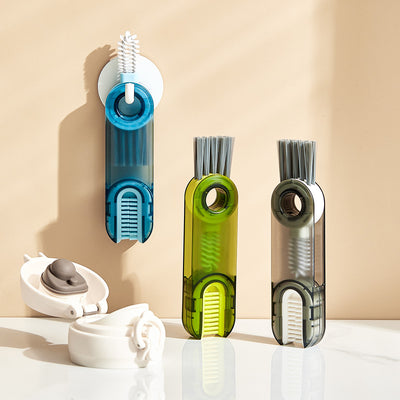
Featured Pick
3-in-1 Bottle, Cup Lid and Straw Cleaning Brush
A spiral bottle brush, bevel crevice brush, and sponge head in one compact, food-grade, BPA-free tool. Cleans bottles, straws, cup lids, thermos flasks, decanters, and more.
From €6,41 Shop NowWhy This Brush Works So Well
- The spiral tip reaches all the way to the bottom of narrow bottles and flask interiors
- The bevel corner brush fits into lid grooves and cup seams that a sponge cannot reach
- The sponge head handles broader cup surfaces and removes complex residue quickly
- Made from food-grade, BPA-free, recyclable materials that are safe for daily use
- Compact size of 11.4 cm fits in any kitchen drawer without taking up space
- Available in multiple colors and as a set of two, three, or five brushes
- Suitable for bottles, straws, tumblers, thermos flasks, carafes, and baby feeders
You can also browse the full Modern Kitchen Appliances and Tools collection for more practical gadgets that make everyday kitchen tasks easier.
08
How to Keep Your Cleaning Brush Clean
A cleaning brush needs regular care too. A dirty brush spreads bacteria instead of removing it. Here is a simple routine that keeps your brush in good condition for months.
A Simple Cleaning Routine
- Rinse your brush thoroughly under hot running water after every use
- Stand it upright or hang it to dry fully between uses so the bristles do not stay damp
- Once a week, soak the brush in hot water with a little white vinegar for 10 minutes
- Replace your cleaning brush every two to three months, or sooner if bristles start to splay
Signs It Is Time to Replace Your Brush
- Bristles have splayed outward and no longer form a tight cleaning tip
- The brush has developed a smell that does not go away after washing
- The wire handle has started to rust or corrode at the bristle joint
- The sponge head has become discoloured or shows signs of mold
FAQ
Questions People Also Ask
A Cleaner Kitchen Starts with the Right Brush
The best bottle-and-straw cleaning brush reaches every spot that a sponge and dishwasher cannot. It keeps your bottles, straws, and cup lids genuinely clean. It protects your health. And it costs very little to get right. A compact 3-in-1 brush made from food-grade materials is all most households need to cover every narrow cleaning job in one simple tool.
Get Yours from €6,41