

Your bottle looks clean on the outside. But inside the neck, under the lid, and deep in the straw, bacteria and mold grow fast. Here is what is really happening and how to fix it.
You rinse your water bottle every morning. Maybe you run it through the dishwasher once a week. It feels clean. It smells fine. But inside the narrow neck, behind the lid seal, and inside the straw channel, bacteria and mold are building up in spots water alone never fully reaches. This guide explains exactly where that buildup occurs, why it is harmful, and the right way to clean the inside of a water bottle so it stays genuinely safe to drink from.
01
How Dirty Does a Bottle Really Get?
A 2017 study tested reusable water bottles used by athletes. The results were striking. Some bottles carried more bacteria per square centimeter than a kitchen sink or a pet's drinking bowl. Most of those bottles had been rinsed regularly. A few had been through the dishwasher.

The problem is not how often you wash it. The problem is how you wash it. Rinsing and even dishwasher cycles do not physically scrub the inner walls, lid grooves, or straw channels where bacteria grip the surface and form a sticky layer called biofilm.
02
Where Bacteria and Mold Hide Most
Most people clean the wide opening of their bottle and assume the rest is covered. It is not. Bacteria and mold target the spots that stay damp the longest and that cleaning tools cannot easily reach.
The Inner Neck and Bottom
The narrow neck of a bottle traps liquid against the inner walls every time you drink. Saliva, drink residue, and minerals from water all cling to the surface. Without a brush that reaches all the way down, that layer sits undisturbed between washes.
The Lid Seal and Grooves
Rubber seals and lid grooves are the most overlooked spots on any bottle. They stay wet after every use. They are dark and tight, which is exactly where mold prefers to grow. Black or dark brown residue in a lid groove is almost always mold, not dirt.
The Straw Channel
The inside of a reusable straw is a narrow tube that traps drink residue after every sip. It barely gets touched during a standard wash. Biofilm builds up on the inner walls within a day or two. You cannot see it, but it is there every time you drink through the straw.
The Mouthpiece and Spout
Sports bottle mouthpieces and flip-top spouts are handled frequently and come into direct contact with lips. Saliva enters these parts constantly. They need as much attention as the bottle interior itself.
03
Why Rinsing Is Not Enough
Rinsing feels effective because you can see the water flow through the bottle. But what rinsing actually does is remove loose liquid. It does not remove biofilm.
Biofilm is a thin layer of bacteria that attaches itself to a surface and produces a protective coating. Once that layer forms, water flowing over it does not break it up. It needs to be physically scraped away by a brush. This is why bottles that are rinsed daily can still have significant bacterial buildup inside.
Why the Dishwasher Falls Short Too
Dishwashers work well for plates and glasses with open, accessible surfaces. But water jets in a dishwasher cannot reach the bottom of a narrow bottle neck at the right angle or with enough force to scrub the walls clean. Lid grooves and straw channels are almost entirely untouched. Heat kills some bacteria, but it does not remove the biofilm layer. The bacteria that survive begin multiplying again within hours.
What Actually Works
Physical scrubbing with a brush that fits the shape of your bottle is the only method that removes biofilm from narrow surfaces. A spiral bottle brush reaches the bottom and scrubs the inner walls as it turns. A straw brush passes through the channel, breaking up the residue inside. No other cleaning method replaces this step.
04
Signs Your Bottle Needs a Deeper Clean
Sometimes the buildup gives itself away before you think to look. These are the most common signals that your bottle needs more than a rinse.
Visible Clues Inside the Bottle
- Dark spots or patches near the bottom or inner neck - these are mold colonies
- A white or grey filmy coating on the inner walls - this is biofilm or mineral buildup
- Pink or orange tinge around the lid seal - a sign of a specific bacteria called Serratia marcescens
- Cloudy appearance inside a clear bottle that does not clear after rinsing
Signs You Can Smell or Taste
- A stale or musty smell when you open the bottle, even after rinsing
- Water that tastes slightly off or flat, even when it is fresh
- A sour smell coming from the lid or straw after washing
- A lingering smell from a previous drink, like coffee or juice, that will not go away
05
How to Clean Inside a Water Bottle Properly
Cleaning a water bottle the right way takes about three minutes. Here is the full method, step by step.
The Daily Clean
- Disassemble the bottle completely. Remove the lid, straw, and any rubber seal.
- Fill the bottle halfway with warm water and add one drop of dish soap.
- Insert a spiral bottle brush all the way to the bottom of the bottle.
- Twist and rotate the brush as you pull it slowly upward. This scrubs the inner walls on the way out.
- Repeat two to three times, then rinse the bottle thoroughly under running water.
- Use a straw brush to clean through the straw from both ends with soapy water, then rinse.
- Use a small bevel brush to scrub inside the lid grooves and around the rubber seal.
- Stand all pieces upright or on a drying rack and allow them to air dry fully before reassembling.
The Weekly Deep Clean
- Fill the bottle with equal parts white vinegar and warm water.
- Leave it to soak for 15 to 20 minutes. Soak the lid and straw in the same solution in a bowl.
- After soaking, scrub the bottle interior with your spiral brush, the straw with the straw brush, and the lid grooves with the bevel brush.
- Rinse everything thoroughly and allow it to dry completely before use.
06
How Often You Should Clean Your Bottle
The answer depends on what you put in your bottle and how you store it. Here is a simple guide.
For Water Only
- Rinse after every use
- Full brush clean with dish soap every one to two days
- Vinegar deep clean once a week
For Coffee, Tea, or Juice
- Full brush clean after every single use, not just a rinse
- Sugar and tannins in drinks accelerate bacterial growth significantly
- Vinegar deep cleans every three to four days
For Protein Shakes or Milk-Based Drinks
- Clean immediately after every use, within 30 minutes where possible
- Protein residue breaks down quickly and produces strong odors within hours
- Vinegar or baking soda deep clean after every two to three uses
07
The Right Tool for the Job
No cleaning method works without the right brush. A standard kitchen sponge cannot reach the bottom of a narrow bottle. A dishwasher cannot scrub the inner walls. You need a brush that is shaped for the job.
The most practical option for everyday use is a 3-in-1 bottle and straw cleaning brush that combines a spiral bottle brush, a thin straw brush, and a bevel crevice brush in one compact tool. It covers every part of your bottle in a single cleaning session.
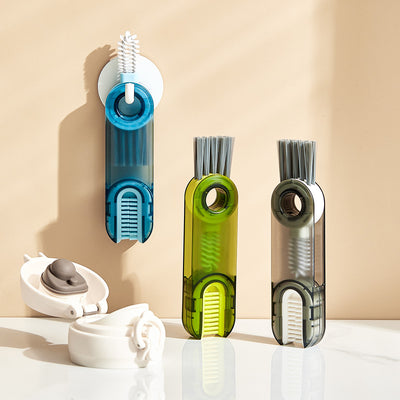
Recommended Tool
3-in-1 Bottle, Straw, and Lid Cleaning Brush
Spiral tip for bottle interiors, thin straw brush for straw channels, and bevel brush for lid grooves. BPA-free, food-grade materials. Compact at 11.4 cm.
From €6,41 Shop NowWhat to Look for in a Bottle Brush
- A spiral-tipped head that physically scrubs inner walls rather than just wiping them
- Long enough to reach the base of your bottle, ideally 20 cm or more for standard sizes
- Food-grade, BPA-free bristles that are safe for contact with drinking surfaces
- A stainless steel or rust-resistant wire handle that holds its shape over time
- A compact design that stores easily next to your sink without taking up space
For a full comparison of brush types and what to look for when buying, read our guide to the best bottle and straw cleaning brushes for a spotless kitchen.
FAQ
Questions People Also Ask
A Clean Bottle Is Safer Than It Looks
Rinsing keeps your bottle looking clean. Brushing keeps it actually clean. A spiral bottle brush reaches the spots that harbor bacteria and mold before they become a problem. Three minutes a day is all it takes to make your reusable bottle genuinely safe to drink from every single time.
Get the Cleaning Brush from €6,41